
Student Voices
- Achievements of Female Students
- Achievements of International Students
- Math Girls!
- Shining Women in Engineering!
- Public Relations Magazine
Achievements of Female Students
Materials & Electronics Field
Discover Your Academic Path Through What Inspires You
Do you enjoy playing games on your smartphone or exploring virtual worlds through VR goggles?
These technologies, now essential in our daily lives, operate through the electrical power generated by tiny particles known as electrons.
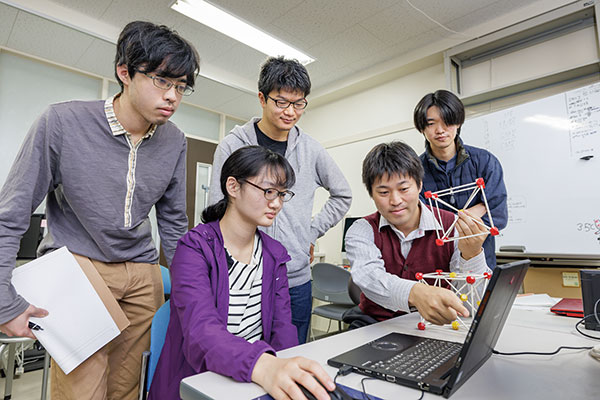
In the Functional Device Physics Course within the Department of Environmental Mathematical and Physical Sciences, School of Environmental Science and Engineering, students explore this world of electrons in depth. The course engages in the development of cutting-edge electronic devices, including high-performance smartphone cameras and next-generation display technologies. You will learn how the mechanisms inside a smartphone function, how virtual reality environments are created, and gain hands-on experience in designing and developing entirely new electronic devices.
…
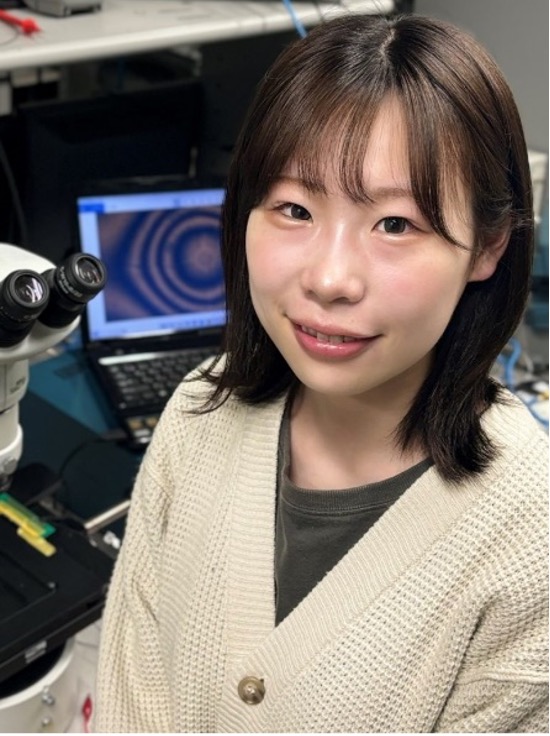
Honoka Kobayashi
A University Life Dedicated to Achieving My Future Dreams
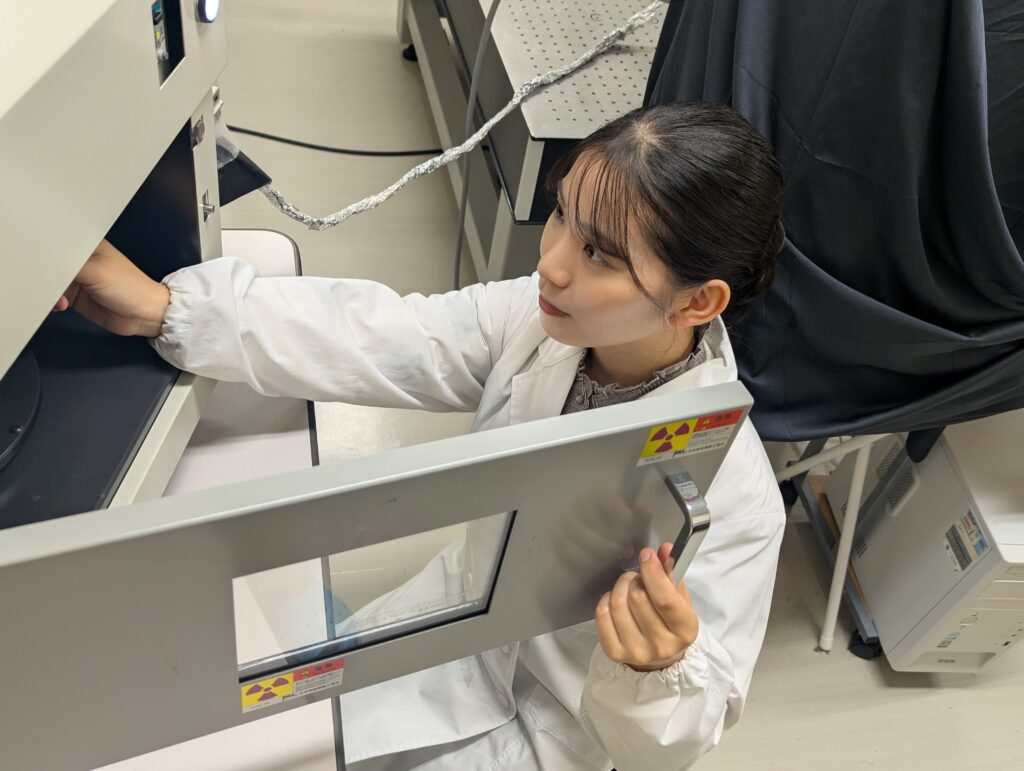
During my undergraduate years, I immersed myself in research on liquid-crystal lenses while also studying to obtain a teaching license. I gained extensive experience ranging from simulating the alignment of liquid-crystal molecules to actually fabricating liquid-crystal lenses—skills that span both software development and hands-on manufacturing. In the Kawamura Laboratory, I also learned the fundamentals of electronics, which greatly deepened my understanding of device design and fabrication.
In graduate school, I presented my research twice at the Liquid Crystal Conference, and the opportunity to interact with researchers from across Japan became an invaluable asset. Through exposure to diverse research topics, I was able to rediscover both the challenges and the potential of my own work, which strengthened my motivation and commitment to research.
…

Rina Denhōya
(Completed Master’s Program in March 2024, Pentel Co., Ltd.)
Open the Door to Science—Your Future Has No Limits!
I joined Mitsutoyo Corporation, a company that manufactures precision measuring instruments supporting the quality of virtually every product in the world. From tiny screws to large industrial machines, accurate dimensions are essential in manufacturing, and Mitutoyo’s instruments play a vital role in ensuring that accuracy. Even the smartphone you use may contain parts made with the help of Mitutoyo’s measurement tools.
Liquid-crystal lenses can adjust focus by changing the refractive index of the lens region when voltage is applied. In my research, I focused on a component inside the lens called the “draw-out electrode” in order to further improve lens performance. By carefully designing the shape and placement of this electrode, I explored lens structures that minimized defects.
…

Hiyori Hiyama
(Completed Master’s Program in March 2024, Mitutoyo Corporation)
Aiming to Develop Next-Generation IoT Devices that Make the World More Convenient
Karin Hatakeyama
I graduated from a junior high and high school in Akita City and entered Akita University through the AO entrance examination (now the Comprehensive Selection system).
Since childhood, I have loved making things, and I vaguely imagined that I wanted a career connected to manufacturing. However, when I first entered high school, I still had no clear vision of what I wanted to become, and unlike many of my classmates, I couldn’t confidently talk about my future dreams.
As the exam season approached, I visited various universities during their open campuses. It was then that I learned that research in the field of functional materials contributes directly to the development of future products. This discovery motivated me to apply to a course at Akita University where I could study functional materials, and I entered through the AO (now Comprehensive Selection) examination.
…


Mathematical Science Field
Sharing the Joy of Mathematics
I chose the Mathematical Science Course because I want to become a teacher who can convey the fascination and beauty of mathematics to many students.
In the teacher-training program, there are more required credits than for other students due to intensive lectures, teaching practicums, and internships. Balancing these with the specialized subjects of the course is not easy. However, the challenges make the experience all the more rewarding, and through various activities in real educational settings, I strongly feel that I have grown as a person.
…
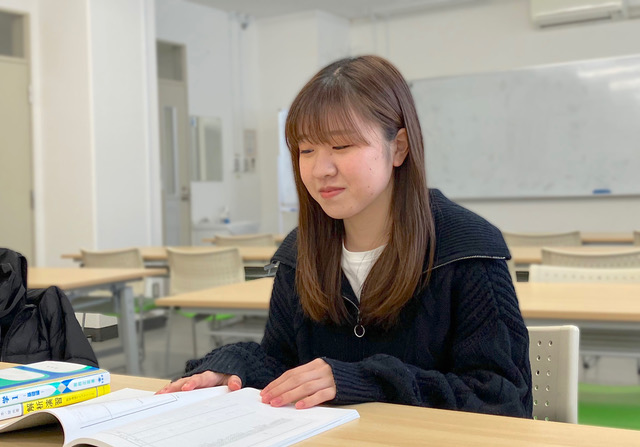
Yayako Aneishi
Inquiry by your curiosity
In Advanced Course, we have a seminar where we talk about the content of the book each student was interested in. I am reading a book in English and also talk about it in English (others talk in Japanese). I am really motivated in this seminar because my seniors and friends in this course are highly motivated and they are enjoying math, and I am sure it makes me improve in Mathematics and English. In addition, our teachers give us some opportunities and support us if we ask them. It is a really good environment to study what you are interested in. Why don’t you study with us?
Presented at an international conference
Gave a research talk at the Research Institute for Mathematical Sciences (RIMS) at Kyoto University

Saiya Konno
Studying Mathematical Sciences in Central Europe
Yukino Itō
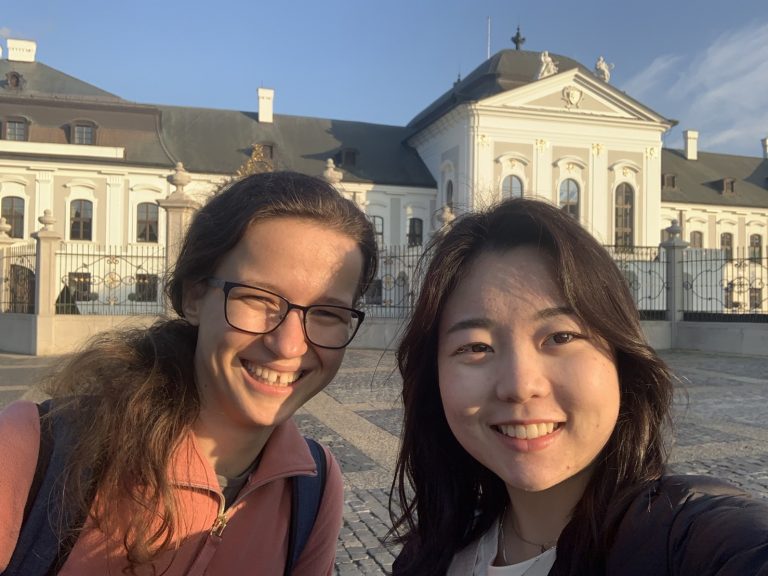
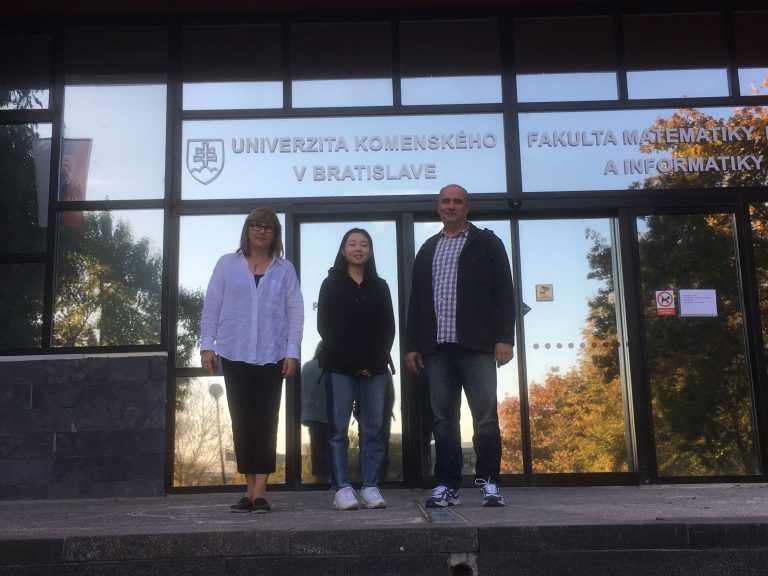
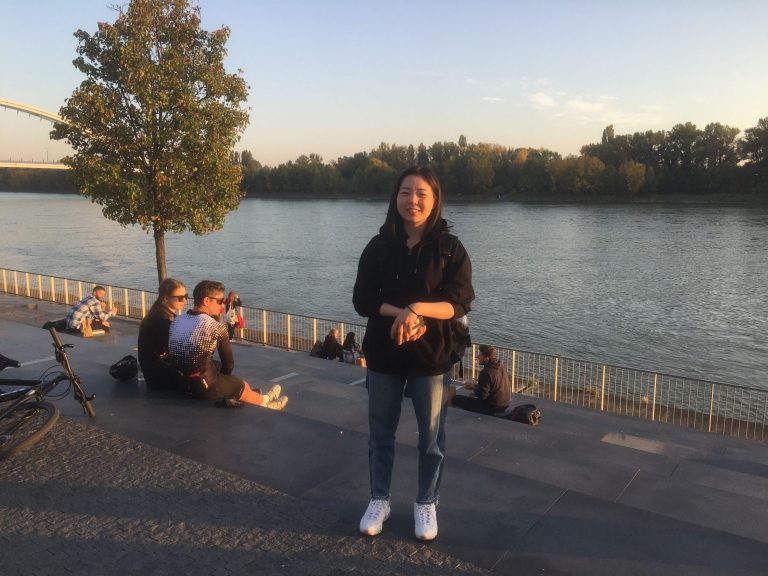
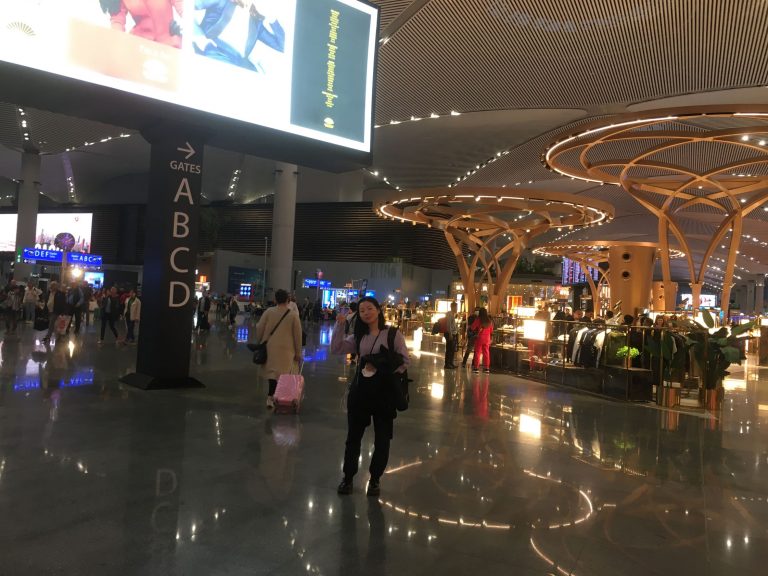
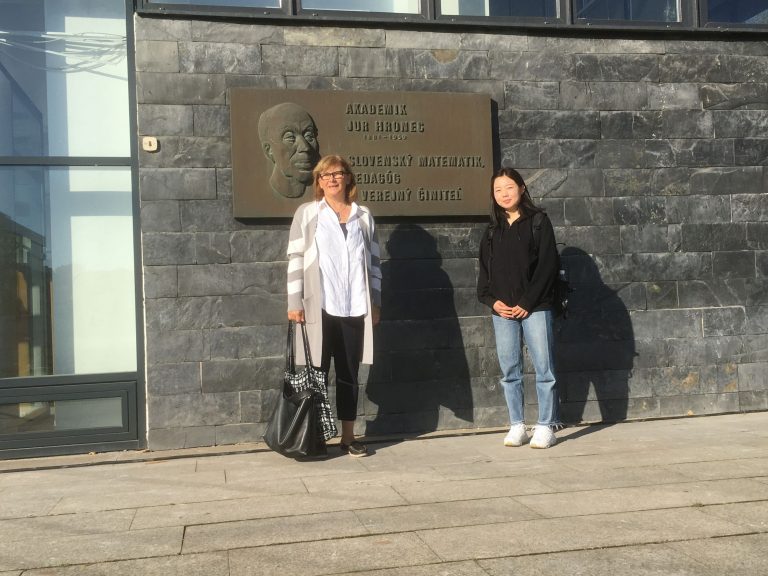
Yukino Itō participated in the Global Innovator Development Program and studied abroad in Slovakia, at the Faculty of Mathematics, Physics and Informatics, Comenius University.
She spent three months in Bratislava, taking data science courses in English and conducting her own research in data science. In addition to her academic work, she made local friends, learned about European culture, and accumulated many valuable experiences that contributed greatly to her personal growth.
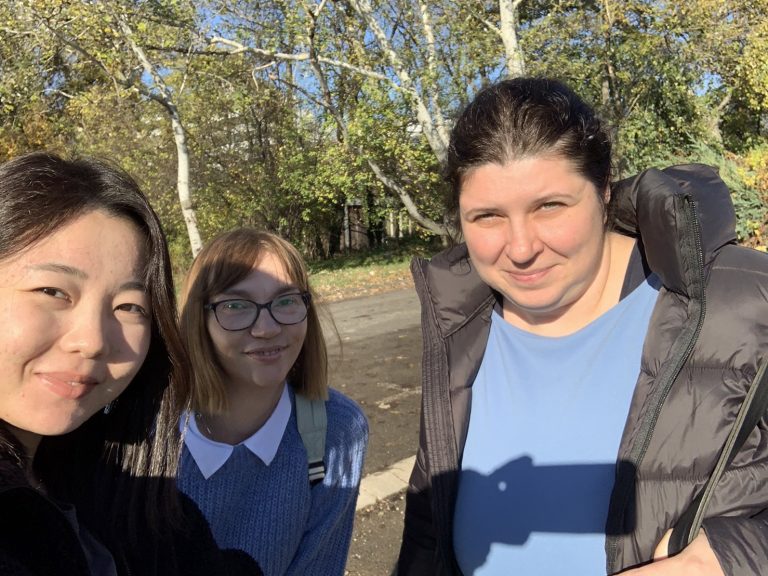
2018 Academic Excellence Award
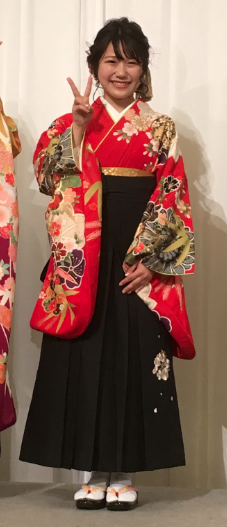
In recognition of her excellent academic performance, Kozue Murakami received the Hokko-kai Prize.
Kozue Murakami
Achievements of International Students
Mathematical Science Field
Tei Kai
Second Year, Mathematical Science Course
(From China)
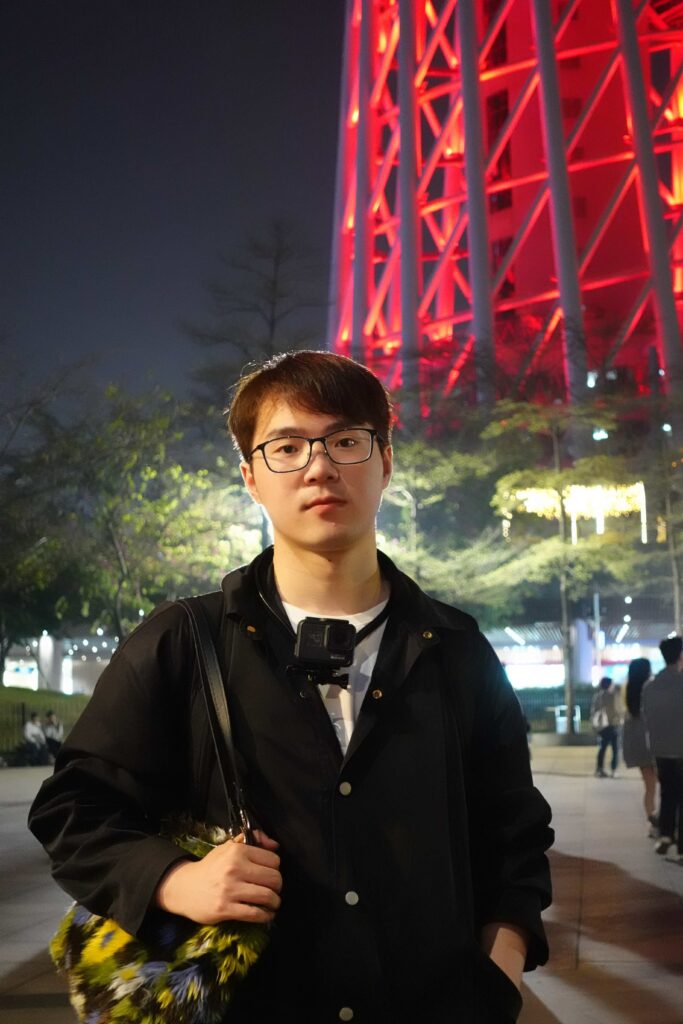
Studying Abroad at Akita University
Motivation for Studying Abroad
I have always enjoyed reading books about scientists. Since childhood, whenever I had free time, I would go to the library and read about their lives. Scientists overcome tremendous difficulties in their pursuit of truth, and their passion always inspired me. In particular, Tabibito (The Traveller) by Hideki Yukawa had a strong influence on me and sparked my dream of studying in Japan.
The Mathematical Science Course at Akita University
In the Mathematical Science Course, students study mathematics, physics, and computer science in an integrated manner. The course is also characterized by its small class size, which allows professors to give individualized study advice tailored to each student. In addition, there is a weekly Mathematics and Physics Question Room where we can ask any questions related to those subjects.
…
Ryo Tōhi
Fourth Year, Mathematical Science Course
(From China)
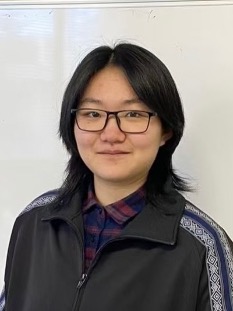
Artificial intelligence has demonstrated capabilities surpassing those of humans not only in perfect-information games such as Go and shogi, but also in more complex imperfect-information games. These games extend far beyond simple entertainment—the strategies developed within them can be applied to solving real-world problems. For example, strategies used in pursuit-evasion games can be utilized for path-planning in dynamic environments. I am analyzing competitive games, including pursuit-evasion games, using AI, with the aim of further improving their strategies.
My three and a half years at university have been extremely fulfilling. In addition to what I have learned in classes, I have gained valuable multicultural experiences through interactions with Japanese friends and other international students. I have also had many opportunities to encounter Japan’s traditional and regional cultures, and the festivals I participated in here in Akita Prefecture remain deeply memorable.
Studying abroad in Japan has been a special and irreplaceable experience for me. By directly experiencing Japanese culture and society—not only through academic study but through daily life—I have greatly broadened my perspective. Moving forward, I hope to continue taking on new challenges, both academically and personally, and strive for further growth.
Li Geitō
Second Year, Mathematical Science Course
(From China)
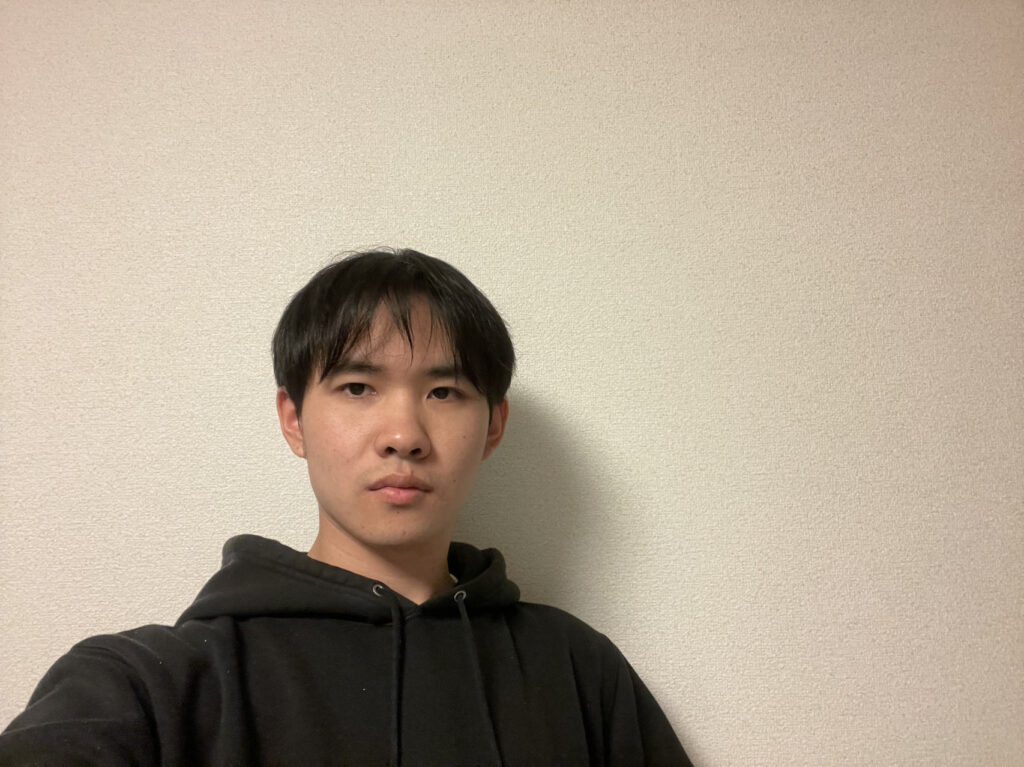
I am a second-year student in the Mathematical Science Course at Akita University. In this course, we engage in theoretical explorations in mathematics, physics, and data science. I would like to share what I find appealing about this program.
Motivation for Studying Mathematical Science
I chose mathematical science because I am fascinated by the simplicity and beauty found within mathematics and physics. For example:
eiπ + 1 = 0 (Euler’s formula)
and Maxwell’s equations—expressions that are mathematically concise yet carry deep meaning. I believe this sense of beauty is the greatest attraction of mathematical science. I also hope to one day contribute to the development and understanding of such theories and discoveries.
…
Electronics field
Go Unkan
Fourth Year (From China)
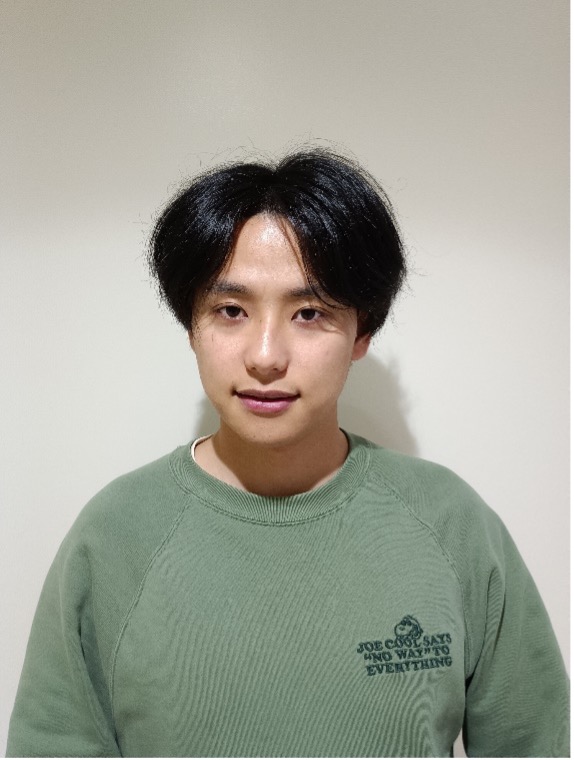
Comment from an International Student
I am conducting research on detecting internal damage in aging structures and identifying defects such as cracks in aircraft turbines. This is a very challenging topic, but my goal is to detect defects at an early stage using ultrasonic measurement techniques and help prevent accidents. In my research, I am also exploring the use of artificial intelligence methods to improve detection accuracy.
I have enjoyed a very fulfilling university life by participating in activities such as the “Japanese Speech Contest for Foreign Residents” and joining projects that address social issues together with Japanese friends. Akita University welcomes many international students from different countries, creating an environment where we can learn about each other’s cultures. I believe this cultural exchange is one of the university’s greatest strengths. I hope you will come to Akita, become our friend, and join us in experiencing Akita’s rich and vibrant festivals.
Studying abroad here has taught me not to simply follow a predetermined path, but to actively shape my own life. I believe this has been the most important lesson of my time at Akita University. In the future, I hope to become an engineer who makes use of the ultrasonic knowledge I have gained and the research mindset I have developed.
Nguyen Tan Dat
First Year (From Vietnam)
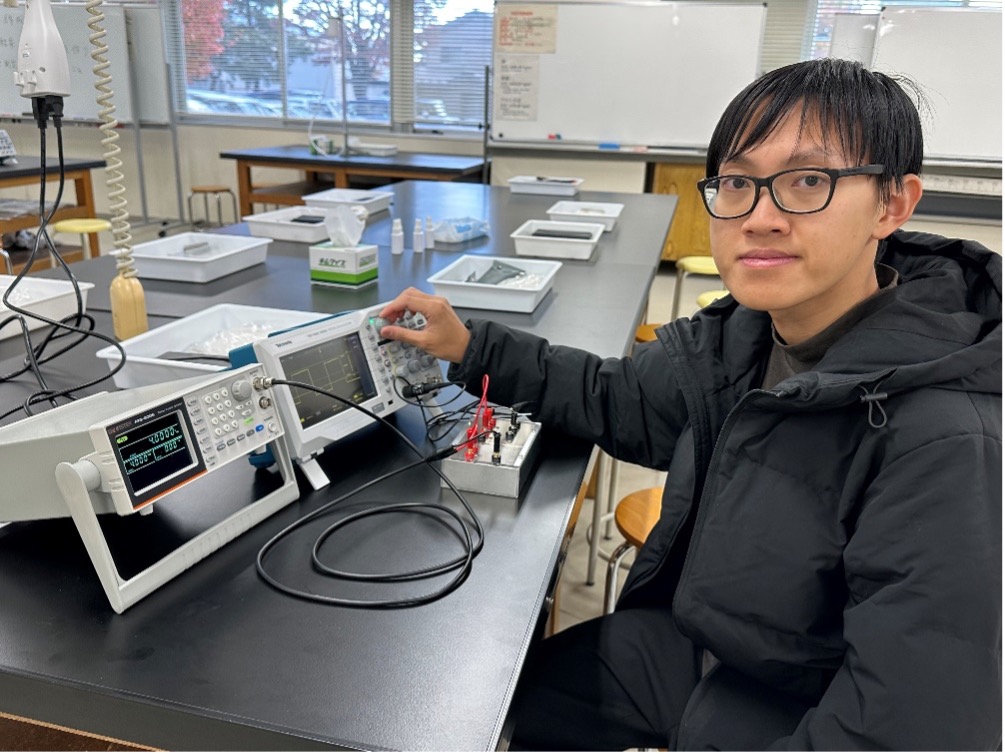
I Want to Be a Bridge Between Japan and Vietnam
My name is Nguyen Tan Dat, a first-year student in the Department of Mathematical, Electrical and Electronic Information Engineering, and I am from Vietnam. Vietnam and Japan have a close economic relationship, particularly in the electronics field, where many companies operate actively in both countries. I study at Akita University while feeling connected to this relationship.
Before enrolling at Akita University, I studied Japanese for one year at a Japanese-language school in Vietnam and another year at a Japanese-language school in Japan. I also heard that many Vietnamese people work in Akita Prefecture, which made the area feel familiar to me. Currently, I am studying university-level mathematics and basic physics, but the course that interests me most is “Introduction to Mathematical, Electrical and Electronic Information Engineering.” Being able to learn about the latest electronics research is extremely inspiring.
In the future, I want to learn Japan’s advanced technologies and become a bridge between Vietnam and Japan. I hope to contribute to the further development of companies in both countries. I feel that by studying at Akita University, I am steadily moving toward that goal. Akita is safe, comfortable to live in, and blessed with beautiful nature. Through my study-abroad experience, I want to learn more about Japanese culture and create lifelong memories.
Norafifa binti Norazhar
Second Year (From Malaysia)
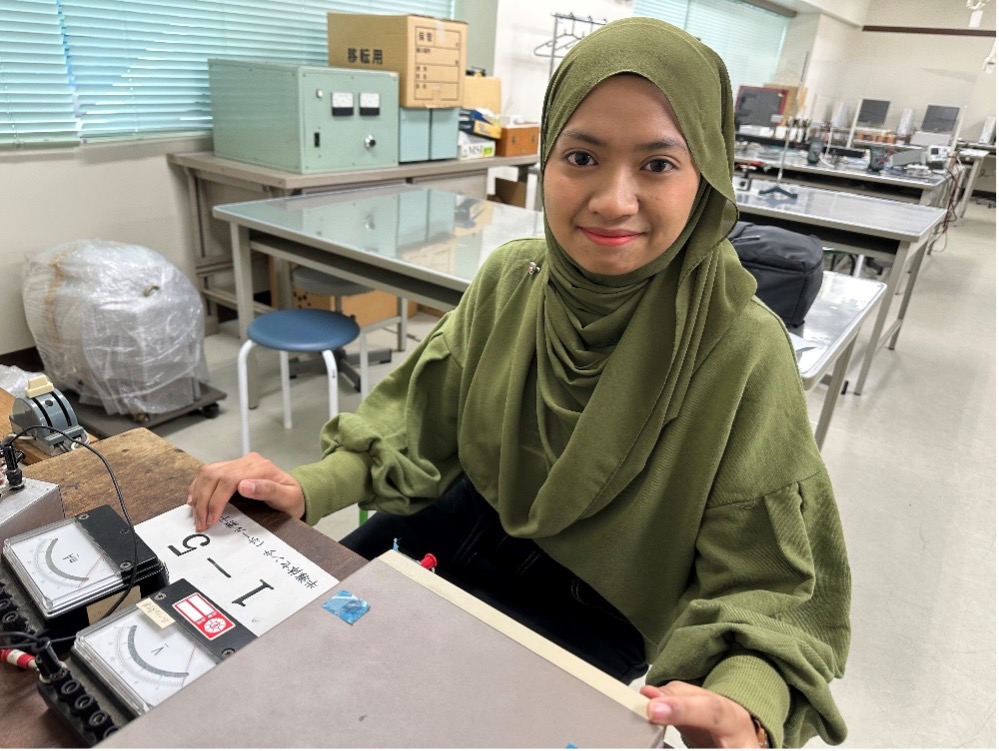
As a second-year student, I have begun studying specialized subjects such as Electronic Circuits and Electrical Circuits in earnest. In the weekly electrical and electronic engineering laboratory class, we conduct experiments using oscilloscopes and testers to observe circuit behavior based on the theories learned in lectures. In the programming practicum, we use the C language to simulate electronic and electrical circuits and analyze data. Through this combination of software- and hardware-based learning, I have been able to deepen my understanding of the field, and I feel a great sense of accomplishment in connecting theory with real-world practice.
These lectures and practical exercises have strengthened my desire to contribute to society as an electrical and electronic engineer. In the future, I hope to develop advanced control systems by integrating them with AI technologies and contribute to the realization of smart cities.
Gu Shuhang
Master’s Program (M2), From China
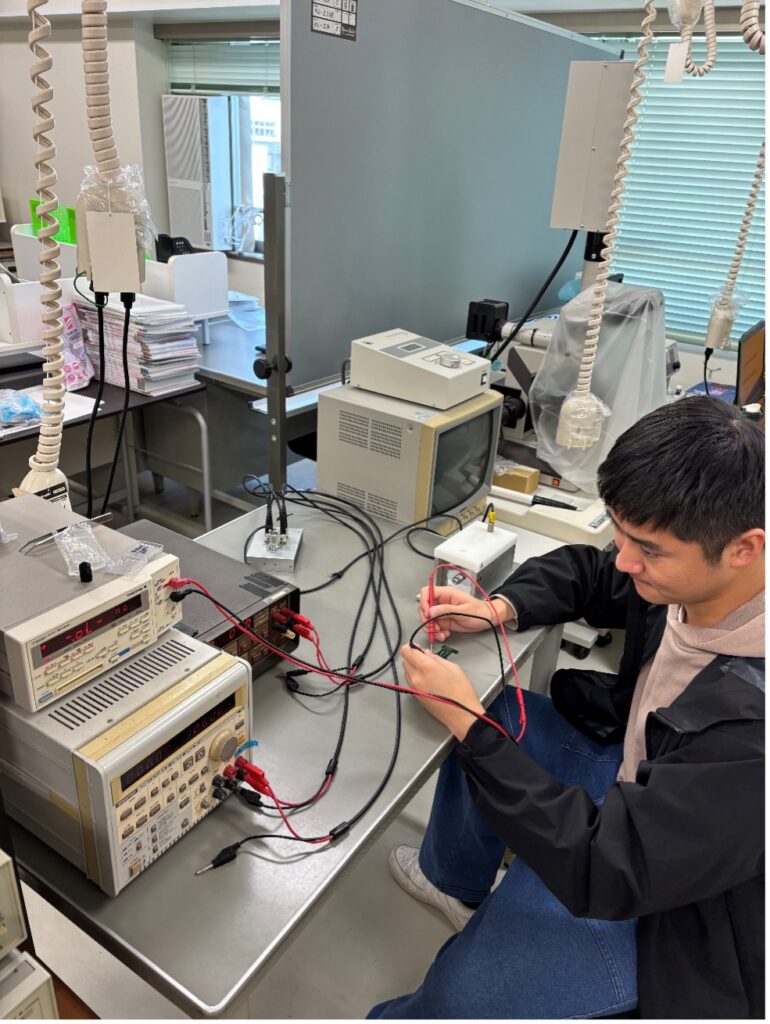
Semiconductors are essential technologies that support the electronic devices we rely on every day, such as smartphones and computers. However, conventional silicon-based semiconductors are reaching their performance limits, and the development of new materials is necessary to realize next-generation, high-performance devices. I am focusing on next-generation semiconductor materials such as nitrides and oxides, with the goal of developing highly efficient light-emitting devices (LEDs).
Specifically, I use a molecular beam epitaxy system to fabricate GaN-based LEDs in the form of nanocolumn crystals grown on polycrystalline silicon substrates—materials widely used in low-cost solar cells. I evaluate both the emission characteristics and the I-V characteristics of the devices. Gallium nitride offers high heat resistance and the potential for highly efficient light emission. However, growing high-quality gallium nitride crystals is extremely challenging, and optimizing the numerous parameters across the different layers of the fabricated diode is essential.
By repeating experiments and refining the growth process, I aim to produce higher-quality crystals and achieve more efficient device operation. My research progresses each day toward realizing these goals.
Materials field
環境数物科学科・機能デバイス物理コース・マテリアル分野の吉村です。
I am Yoshimura from the Department of Mathematical and Physical Science for Environments, Course of Functional Devices and Materials Science.
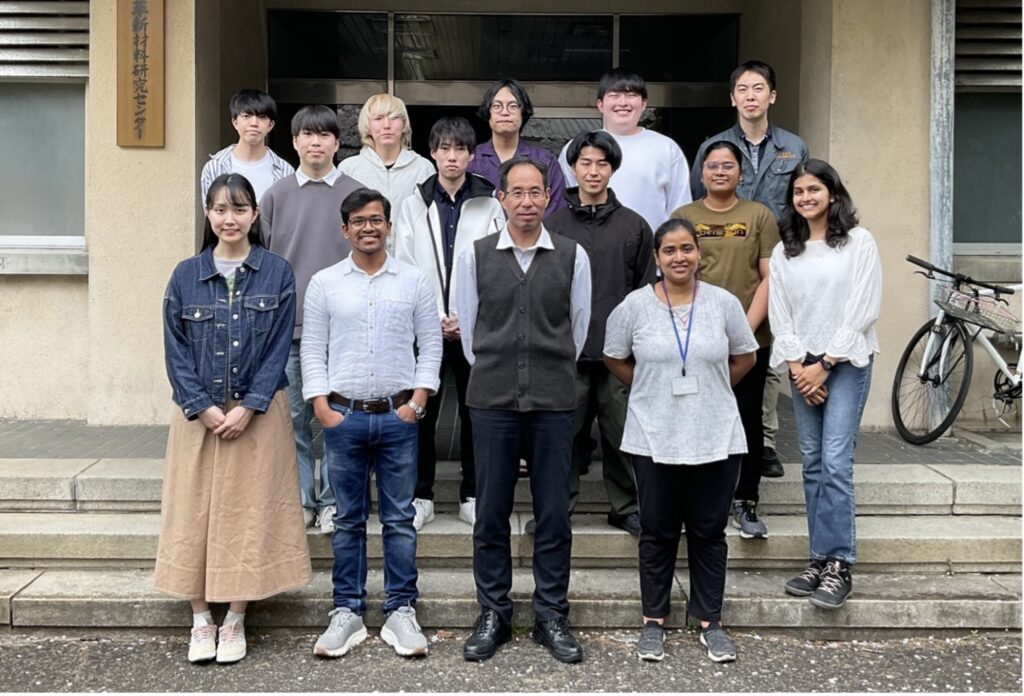
私の研究グループには、2024年3月の段階において、「国費外国人留学生」制度を利用して博士後期課程に入学してきたインドからの留学生が2人(R君・Swatiさん)、「日本学生支援機構(JASSO)海外留学支援制度(協定受入)」制度を利用して半年滞在したインドの大学の博士前期課程学生が2人(Aさん・Yさん)、「私費外国人留学生」として中国から秋田大学に入学して私の研究グループに配属された学部4年生が1人(Kさん)、同じく「私費外国人留学生」として中国から秋田大学に入学して私の研究グループに配属された学部3年生が1人(M君)、合計6人の留学生が所属していました。なお、下の写真は、2024年4月のもので、卒業したKさんは映っていません。
In March 2024, my research group included two international students from India (Mr. R and Ms. Swati) who enrolled in the PhD program using the “Government-sponsored International Student” system, two master’s students from an Indian university (Ms. A and Ms. Y) who stayed for six months using the “Japan Student Services Organization (JASSO) Overseas Study Support System” system, one fourth-year undergraduate student (Ms. K) and one third-year undergraduate student (Mr. M) who enrolled in Akita University from China as a “privately-financed international student” and selected my research group. In addition, the photo below was taken in April 2024, and does not include Ms. K who has since graduated.
…
Tou Kaman
Fourth Year (From China)

In the field of semiconductor manufacturing, thin films play an essential role and are produced through a variety of processes. Many different types of thin films are used inside semiconductor chips, each serving different functions such as insulation, conductivity, or anti-reflection. In addition to the circuits that most people imagine when thinking about semiconductors, thin-film solar cells are another important application.
Hydrogenated amorphous silicon is a material with great potential. Its unique properties may enable flexible, lightweight, and low-cost thin-film solar cells. Furthermore, because it exhibits a wide optical bandgap and excellent electrical characteristics, it is considered highly promising for use in a wide range of electronic devices such as thin-film transistor liquid crystal displays and image sensors. I am currently working to fabricate molecular solid thin films of this material and explore the emergence of new, previously unreported functionalities.
Throughout my studies, I have learned extensively about the materials field—from atoms and molecules and their structures, to metals, ceramics, electronic devices, recording media, and even processing technologies. I have devoted significant time and effort to understanding lectures and deeply considering how experimental tasks relate to theoretical knowledge. The knowledge I have gained has become firmly established, allowing me to enjoy a fulfilling research life. I truly feel that my university experience at Akita University has been extremely meaningful.
In the future, building on the knowledge I have acquired, I hope to contribute to society by developing materials with superior functionalities.
Math girls!
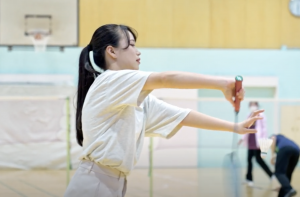
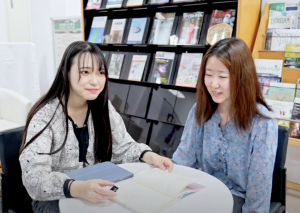
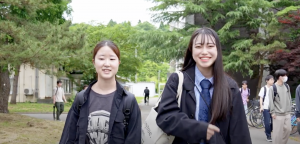
There are many women working in mathematical sciences.
Shining Women in Engineering!
Tech ★ Style (National Network of Engineering Faculties – 55 National Universities)
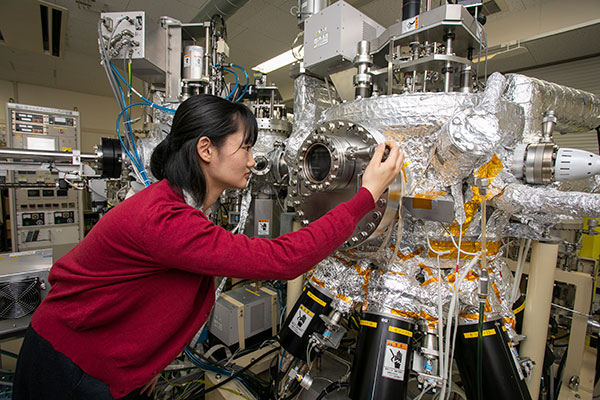
[vol.132] The Power Behind Manufacturing


Public Relations Publications
Integral — Newsletter of the Mathematical Science Course
- Vol.12 (Issued April 1, 2025)
- Vol.11 (Issued April 1, 2024)
- Vol.10 (Issued April 1, 2023)
- Vol.9 (Issued April 1, 2022)
- Vol.8 (Issued April 1, 2021)
- Vol.7 (Issued April 1, 2020)
- Vol.6 (Issued April 1, 2019)
- Vol.5 (Issued April 1, 2018)
- Vol.4 (Issued April 1, 2017)
- Vol.3 (Issued April 1, 2016)
- Vol.2 (Issued April 1, 2015)
- Vol.1 (Issued April 1, 2014)